Private Jeep Transfer
A private jeep transfer to and from Kathmandu to Chame can be arranged at an additional cost of USD 150 per way.




Start-End Location
Difficulty
Grade: Easy
Suitable for beginners. Gentle walks and low altitudes.
Grade: Moderate
Requires basic fitness. Rolling terrain with steep climbs.
Transportation
Max. Altitude
Trip Duration
Meals
Accommodation
The Langtang Valley Trek 8 Days offers an ideal balance of Himalayan scenery, Tamang culture, mountain adventure, and manageable walking days. This trek takes you from Kathmandu to the beautiful Langtang Valley, where you can explore lush forests, traditional villages, alpine landscapes, glaciers, and dramatic Himalayan peaks.
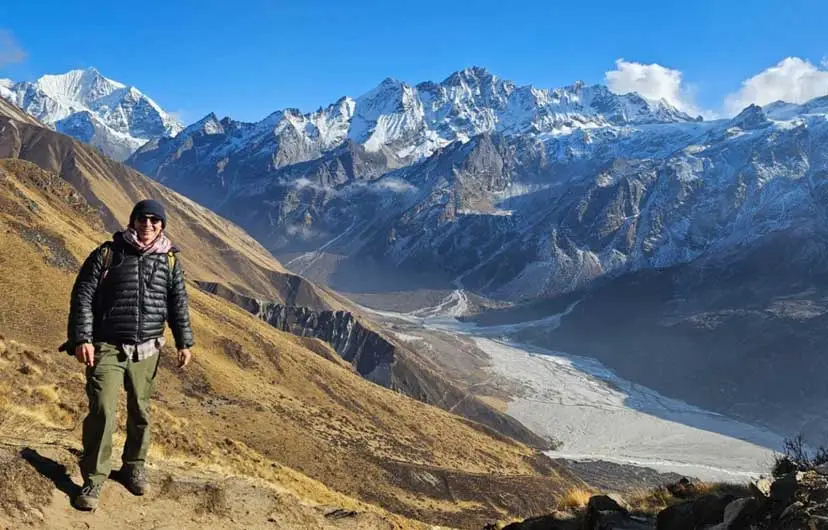
The journey leads through the Langtang National Park and traditional Tamang settlements before reaching Kyanjin Gompa, the cultural and scenic heart of the valley. From here, you can enjoy spectacular views of Langtang Lirung, Langtang II, Dorje Lakpa, Yala Peak, and surrounding mountains.
An 8-day itinerary gives you enough time to experience the highlights of the valley while maintaining a practical schedule. The route also allows you to explore Kyanjin Ri and, depending on your fitness, weather conditions, and itinerary planning, enjoy additional views around the upper Langtang region.
One of the biggest advantages of choosing the Langtang Valley Trek for 8 days is the opportunity to explore both Kyanjin Ri and Tserko Ri, two of the most famous viewpoints in the region. From these high viewpoints, you can enjoy breathtaking panoramic views of Langtang Lirung, surrounding Himalayan peaks, glaciers, and the dramatic landscapes of the upper Langtang Valley.
For travelers with limited time, we also offer shorter 6-day and 7-day Langtang Valley Trek itineraries. These shorter options focus on the main highlights of the valley and provide an excellent Himalayan experience within a more limited timeframe. However, the 8-day itinerary offers a more complete experience, with greater flexibility to explore both Kyanjin Ri and Tserko Ri.
The Langtang Valley Trek offers impressive scenery throughout the journey. The landscape changes dramatically as you gain altitude.
You begin the trek through green hills, terraced fields, and dense forests. The trail then passes through rhododendron, oak, pine, and bamboo forests. As you continue higher, the landscape gradually changes into open alpine meadows and rugged mountain terrain.
The upper valley offers spectacular views of snow-covered peaks and glaciers. From Kyanjin Gompa and nearby viewpoints, you can see magnificent Himalayan mountains, including Langtang Lirung and other peaks of the Langtang range.
The trek takes you through traditional Tamang villages where local communities maintain their unique culture and Himalayan way of life. You can observe traditional houses, Buddhist monasteries, prayer wheels, mani walls, and colorful prayer flags along the trail.
Local people have strong cultural connections with Tibetan Buddhism. Their traditions, language, architecture, and lifestyle reflect the rich heritage of the Langtang region.
Walking through villages such as Langtang and Kyanjin Gompa gives you an opportunity to interact with local communities and learn more about their traditions. This cultural experience makes the trek more than a journey through the mountains.
The cost of the Langtang Valley Trek 8 Days depends on the services included, group size, and travel season. At Ruby Alpine Trails, we offer this 8-day trekking package at USD 640 per person.
The package generally includes transportation from Kathmandu, trekking permits, an experienced guide, accommodation, meals during the trek, and other essential trekking services. We also offer special group discounts, making the trek more affordable for families, friends, and larger groups traveling together.
The final cost may vary depending on additional services and personal expenses. Travel insurance, snacks, drinks, hot showers, charging services, and extra accommodation in Kathmandu may cost extra.
Contact Ruby Alpine Trails with your travel dates and group size to receive the latest price and a customized trekking offer.
The Langtang Valley Trek offers a rewarding Himalayan adventure, but trekkers should prepare for several challenges along the route. The trail passes through varied terrain and gradually reaches higher elevations, making good fitness and proper acclimatization important.
The difficulty mainly comes from long walking days, steep ascents and descents, rocky sections, and changing mountain weather. As you move higher toward Kyanjin Gompa and the viewpoints of Kyanjin Ri and Tserko Ri, the thinner air can make the trek more physically demanding.
However, most travelers with reasonable fitness can complete the trek comfortably by maintaining a steady pace and taking regular breaks. Staying hydrated, eating nutritious meals, dressing appropriately for changing weather, and allowing enough time for your body to adjust to the altitude will help you enjoy the journey safely.
Safety remains an important part of every Himalayan trekking journey. The Langtang Valley Trek follows a popular route, but the mountain environment can still present challenges.
Our familiar and professional guide in the region will help you follow the correct trail, manage daily walking schedules, and respond to changing weather conditions. Trekkers should also walk at a comfortable pace and pay attention to signs of altitude sickness.
Travel insurance that covers trekking at the required altitude is highly recommended. Carrying essential medication, a first-aid kit, warm clothing, and suitable trekking equipment also helps you stay prepared.
The Langtang region has a rich Tamang and Tibetan-influenced cultural heritage. Local communities follow Buddhist traditions and maintain customs that have developed over generations.
You can see prayer flags, prayer wheels, chortens, monasteries, and mani walls throughout the trail. Visitors should respect local customs and religious sites during the trek.
Simple actions such as asking permission before taking photographs, dressing respectfully near monasteries, and walking around religious structures in the correct direction help travelers show respect for local traditions.
Our trekking experts are ready to help you plan your perfect Langtang Valley Trek. Simply share your travel dates, group size, and interests, and we will help arrange transportation, permits, accommodation, and experienced local guide services.
Whether you choose the 8-day Langtang Valley Trek for more time to explore Kyanjin Ri and Tserko Ri, or select a shorter 6-day or 7-day itinerary because of limited time, we can tailor the journey to suit your travel plans and interests.
Start this incredible Himalayan adventure, explore the breathtaking Langtang Valley, experience the rich culture of the Tamang communities, and discover the magic of the Himalayas like never before. Your unforgettable journey through one of Nepal’s most beautiful mountain regions begins here.
Choose the optional services that best suit your Langtang Valley Trek 8 Days travel plans.
A private jeep transfer to and from Kathmandu to Chame can be arranged at an additional cost of USD 150 per way.
Booking process
Personalizing your Langtang Valley Trek 8 Days is simple—follow these steps.
Choose your preferred departure date.
Indicate the number of travelers.
Click the "Book Now" button.
Select your preferred add-ons.
Complete the payment process.
Trek starts with a scenic drive from Kathmandu to Syabrubesi, the gateway to the Langtang region. The road winds along the Trishuli River, offering panoramic views of lush hills, terraced farmlands, and small settlements. Pass through Dhunche, the administrative centre of Rasuwa District, before reaching Syabrubesi. This is the starting point for the Langtang Valley hike. Relax and prepare for the trek ahead.
Highest Point
4,985 m
Tseriko Ri
Lowest Point
1,400 m
Kathmandu
No upcoming departures are currently scheduled. Please contact us to arrange a custom date.
Tea houses provide food and accommodation throughout most of the Langtang Valley Trek. These local lodges offer a comfortable place to rest after a day of walking.
You can enjoy popular Nepali dishes such as dal bhat, rice, lentils, vegetables, noodles, soups, pasta, potatoes, and Tibetan-style bread. Dal bhat remains a popular choice because it provides a filling and nutritious meal for long trekking days.
Tea houses usually provide basic rooms with beds, mattresses, and blankets. Most rooms have twin beds. Facilities become more basic as you travel toward higher elevations, but the warm hospitality of local families makes the experience comfortable and memorable.
Can find drinking water at tea houses, local taps, and natural water sources along the trekking route. However, trekkers should treat water before drinking it.
You can use water purification tablets, a portable water filter, or other reliable purification methods. Many tea houses also provide boiled drinking water for an additional cost.
Carrying a reusable water bottle helps reduce plastic waste and supports more sustainable trekking practices.
Charging facilities are available at most tea houses along the Langtang Valley Trek, allowing you to charge your phone, camera, power bank, and other electronic devices. However, electricity may not always be available due to power cuts or unexpected damage to local power systems in the region.
For this reason, we strongly recommend carrying a fully charged power bank as a backup.
No. of Pax
It is moderately challenging due to its varied terrain and high altitude, but it's suitable for most trekkers with good fitness.
Yes, the Langtang Trek is absolutely worth it. It offers stunning Himalayan scenery, rich Tamang culture, beautiful forests, glaciers, and spectacular viewpoints like Kyanjin Ri and Tserko Ri. It is also easily accessible from Kathmandu and provides an unforgettable Himalayan experience without requiring a domestic flight.
The Langtang Valley Trek typically takes 5 to 10 days, depending on your chosen itinerary. Shorter itineraries cover the main highlights in around 5–7 days, while longer itineraries allow more time to explore viewpoints such as Kyanjin Ri and Tserko Ri.